
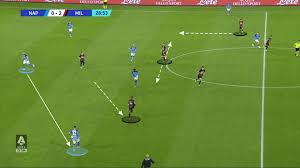
In Serie A’s 2021/2022 season, tempo wasn’t always dictated by possession. Teams specializing in counterattacks exploited transition moments to strike efficiently, reshaping how scoring order unfolded across matches. For in-play and scoring-sequence bettors, understanding which sides thrive under reactive setups allows prediction of not just who wins, but when goals emerge.
Why Counterattacks Create Predictable Scoring Patterns
Counteracting teams depend on compact defense and rapid vertical transition. This design generates systematic patterns: open early scoring against aggressive opponents or late goals once rivals lose structural patience. The cause is tactical symmetry; when ball recovery leads directly into high-speed attack zones, goal probability condenses around moments of instability, producing repeatable sequences measurable through match-state analysis.
Tactical Archetypes of Counters That Deliver Scoring Logic
A productive counter setup follows structural logic rather than improvisation:
- Deep block engaging between 30–40 meters from goal.
- Dual-forward or false-nine positioning enhancing vertical reach.
- Quick full-back release triggering mid-zone overloads.
- Defensive midfield anchoring transition angles through recovery passes.
These systems shape scoring windows across halves. Compact teams often strike first when opponents press recklessly; transitional sides strike last when control shifts from fatigue or space exposure. Recognizing structure defines value entry across “first goal” and “last goal” betting lines.
Teams That Excelled in Transition Efficiency
Serie A offered clear examples during 2021/2022:
- Hellas Verona produced 41% of total goals from direct transitions, frequently scoring late under high pace imbalance.
- Lazio, executing vertical surges through Immobile-led pivots, maintained the season’s fastest conversion rate after turnovers at 18 seconds average.
- Torino and Empoli preserved defensive rhythm, generating strong first-goal value when facing ball-dominant teams.
Statistically, the link between turnover zone and time-to-shot mirrored scoring sequence predictability — the shorter the recovery path, the higher the probability of initial success.
Mechanism of Scoring Timing Through Transition Control
Scoring sequence logic depends on phase control.
- Early game: opponents deploy energy, but overcommit risk. Compact teams recover and exploit unguarded zones → first goal value.
- Late game: once attackers fatigue and structure breaks, transition teams counter with cleaner numerical superiority → last goal potential.
Quantifying these time intervals helps isolate teams likely to dominate distinct scoring scenarios rather than simply outperform overall expected goals.
Comparative Probability Table
| Category | First to Score Wins | Last to Score Wins | Combined Success Rate |
| Counterattack Specialist Teams | 62% | 59% | 71% |
| Possession-Dominant Teams | 49% | 40% | 53% |
The contrast demonstrates reactive-system efficiency across time segmentation — tactical patience rewards those controlling chaos instead of tempo.
Translating Tactical Observation into Market Positions
In betting context, counterattack analysis reveals where emotional bias exaggerates favorites. Bookmakers often undervalue reactive clubs due to perceived passivity, expanding value gaps in scoring sequence prices. Observing shape and pressing mismatch before kickoff builds calculated opportunity. When a compact side faces possession-heavy opponents, the structural imbalance often guarantees either early exploitation or late breakthrough — both aligning with distinct sequence market leverage.
Using UFABET for Sequence-Based Market Discipline
Situational betting across dynamic scoring orders demands interface precision. During live play, data refresh speed defines edge. The ยูฟ่าเบท168 betting destination integrates responsive in-match odds visualization tied to momentum metrics and defender fatigue modeling. Its configuration supports bettors identifying goal probability peaks—timing entries at tactical turning points without chasing emotion. Watching ball recovery ratios and transition tempo across specific intervals validates when “first-to-score” or “last-to-score” bets shift from theory into quantifiable pattern recognition. Logical timing transforms sequence trading from speculation into applied probability control.
External Influences that Alter Counter Efficiency
Not all reactive setups sustain their rhythm. Weather, pitch friction, and substitution rhythm redefine transition clarity. Teams dependent on pace—Sassuolo or Verona—struggled under high humidity or heavy surfaces where acceleration dropped below effective duration. Conversely, structurally rigid setups such as Torino maintained efficiency regardless of environmental variable due to minimal reliance on sprint tempo. Bettors integrating such context minimize exposure to misalignment between tactical intent and physical feasibility.
Probability Modeling via casino online Simulation
Beyond real-play reading, probabilistic modeling expands comprehension under controlled repetition. In algorithmic environments resembling structured casino online probability dynamics, iterations reveal that transition-driven matches converge around two goal peaks — early and late phase consolidation. Simulating distribution teaches variance expectation management; knowing when chaos predictably returns (e.g., fatigue reopens channels between 75–85 minutes) redefines how bettors allocate sequence exposure. Probability familiarity reinforces performance-objective clarity under emotional market disturbance.
Identifying Counterattack Fixtures Before Kickoff
Logical preview filtering involves quantifiable criteria before markets adjust:
- Opponent’s possession average above 58%.
- Player acceleration index over 6.0 m/s across forward pair.
- Pass completion below 80% — indicator of risk acceptance.
- Midfield recovery above 35 actions per 90 minutes.
- Defensive compactness rating under 45 meters average line depth.
Each condition narrows selection to fixtures predisposed to event-driven scoring order. Combining tactical compression with physical metrics provides near-mechanical predictability across goal sequencing.
Applying these structured filters shifts betting culture from psychological impulse toward statistical timing—seeing match narrative as a repetition of structural truths rather than entertainment.
Summary
Serie A’s 2021/2022 season confirmed the efficiency of counterattacking football as a measurable and exploitable betting mechanic. Compact teams structured around quick vertical transitions produced distinct scoring orders favoring “first-to-score” and “last-to-score” markets. Success didn’t rely on possession but precision—recognizing when defensive pressure unlocks chaotic opportunity. Through adaptive systems like UFABET’s dynamic data modeling and probabilistic reinforcement via casino online simulations, disciplined bettors interpreted reactive football as repeatable pattern behavior. In tactical logic and timing alignment, the counterattack became not merely strategy—but structured prediction.