
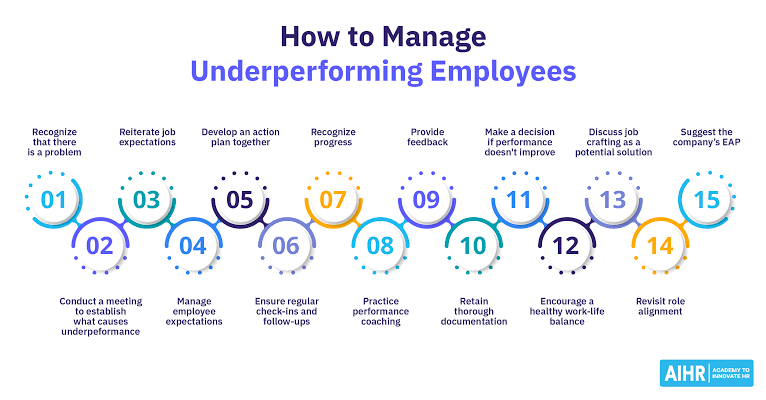
Managing employee performance is an important responsibility for every business. While most employees aim to meet workplace expectations, there may be situations where an individual consistently fails to achieve required standards. This can affect productivity, team morale, customer service and overall business performance.
Handling underperformance requires more than simply telling an employee that their work is not satisfactory. Managers need to identify the underlying issues, communicate expectations clearly, provide reasonable opportunities for improvement and follow a fair process.
However, not every manager has the experience or confidence to manage difficult performance conversations. This is where professional HR support can make a difference. HR consultants can help businesses establish structured performance management processes, guide managers through employee discussions and ensure that decisions are supported by appropriate documentation.
Understanding how to address underperformance fairly can help businesses maintain workplace standards while giving employees a reasonable opportunity to improve.
Understanding Employee Underperformance
Employee underperformance occurs when an individual does not consistently meet the expected standards of their role. These expectations may relate to work quality, productivity, communication, attendance, behaviour or the completion of assigned responsibilities.
Underperformance can develop for several reasons, and managers should avoid making assumptions before understanding the situation.
Common causes include:
- Unclear job responsibilities or performance expectations.
- Insufficient training or workplace support.
- Lack of appropriate resources.
- Changes in workload or business requirements.
- Communication difficulties between employees and managers.
- Personal circumstances affecting work performance.
- Gaps in skills, knowledge or experience.
Identifying the reason behind the performance issue is an important first step. A manager who understands the underlying problem is better positioned to identify an appropriate solution.
1. Identifying Performance Issues Early
Addressing performance concerns early can prevent smaller issues from becoming more serious workplace problems.
Managers should regularly review employee performance and compare actual outcomes with the expectations established for the role.
Performance concerns may include:
- Repeatedly missing agreed deadlines.
- Producing work that does not meet required quality standards.
- Failing to complete assigned responsibilities.
- Regularly making avoidable mistakes.
- Demonstrating poor communication or teamwork.
- Not following established workplace procedures.
Managers should focus on specific examples rather than general statements. For instance, explaining that an employee has missed three agreed project deadlines provides clearer information than simply saying their performance is poor.
Keeping accurate records of performance concerns also helps managers identify patterns and prepare for constructive discussions.
2. Understanding the Reasons Behind Underperformance
Before starting a formal performance management process, managers should understand why an employee is struggling.
Not every performance issue results from a lack of effort or motivation. Sometimes employees need additional training, clearer instructions or better access to workplace resources.
Managers should arrange a private conversation to discuss the concerns and give the employee an opportunity to explain their perspective.
Useful questions may include:
- Are the current responsibilities clear?
- Is there any part of the role causing difficulty?
- Do you have the resources and training required?
- Are there workplace challenges affecting your performance?
- What support would help you meet expectations?
These discussions can help identify practical solutions before more formal action becomes necessary.
3. Setting Clear and Measurable Performance Expectations
Employees need to understand what satisfactory performance looks like. Without clear expectations, it can be difficult for managers to assess whether someone is meeting the requirements of their role.
Performance expectations should be specific, reasonable and connected to the employee’s responsibilities.
For example, expectations may include:
- Completing assigned tasks within agreed timeframes.
- Meeting established quality standards.
- Following workplace procedures.
- Communicating progress and potential delays.
- Meeting agreed customer service requirements.
- Demonstrating appropriate workplace behaviour.
Where possible, managers should establish measurable objectives so that progress can be reviewed consistently.
Clear expectations also reduce misunderstandings because employees know what improvements are required and how their performance will be assessed.
4. Conducting Fair Performance Discussions
Performance discussions can be difficult for both managers and employees. However, they are an important part of addressing workplace concerns.
Managers should approach these conversations professionally and focus on facts, expectations and possible solutions.
A fair performance discussion should generally include:
- Explaining the specific performance concerns.
- Providing relevant examples.
- Listening to the employee’s response.
- Clarifying the required performance standards.
- Discussing possible support or training.
- Agreeing on practical next steps.
- Explaining how progress will be reviewed.
Managers should avoid personal criticism, assumptions or unnecessarily confrontational language.
Employees should also have a reasonable opportunity to respond to the concerns and explain any relevant circumstances.
5. Developing a Performance Improvement Plan
When informal discussions do not resolve the issue, a formal Performance Improvement Plan (PIP) may be appropriate.
A PIP provides a structured approach to identifying performance concerns, setting improvement objectives and reviewing progress over an agreed period.
A typical performance improvement plan may include:
| Component | Purpose |
|---|---|
| Performance concern | Identifies the specific issue that needs improvement. |
| Expected standard | Explains the required level of performance. |
| Improvement objectives | Establishes clear and measurable goals. |
| Support provided | Identifies training, guidance or resources available. |
| Review timeframe | Sets dates for checking progress. |
| Review outcomes | Records whether the required improvements have been achieved. |
The timeframe should be reasonable for the type of improvement required. Employees should receive appropriate support and understand what happens if expectations are not met.
A PIP should be used as a genuine improvement tool rather than simply as a formality before disciplinary action.
6. Providing Training and Ongoing Support
Employees may need additional guidance to achieve the required performance standards. Providing appropriate support is therefore an important part of a fair performance process.
Depending on the situation, support may include:
- Additional role-specific training.
- Coaching from an experienced team member.
- Clearer work instructions.
- Regular manager check-ins.
- Access to suitable workplace resources.
- Adjustments to workload or task priorities where appropriate.
Managers should monitor whether the support provided is helping the employee improve.
Regular communication also allows concerns to be identified early and gives employees an opportunity to ask questions or raise difficulties.
7. Maintaining Accurate Performance Documentation
Documentation is essential when managing underperformance. It helps create a clear record of discussions, agreed expectations, support provided and progress achieved.
Managers should maintain appropriate records throughout the process.
Useful documentation may include:
- Performance review notes.
- Written examples of performance concerns.
- Records of employee discussions.
- Agreed improvement objectives.
- Training and support provided.
- Performance improvement plans.
- Follow-up meeting outcomes.
Documentation should be factual, accurate and stored securely. Businesses should also ensure that employee information is handled confidentially and in accordance with applicable privacy obligations.
8. How HR Consultants Support Managers
Managers may understand their team’s operational requirements but still need professional guidance when handling complex performance matters.
Experienced HR consultants can help businesses establish consistent processes and guide managers through difficult employee situations.
Their support may include:
- Reviewing existing performance management policies.
- Advising managers on appropriate procedures.
- Helping prepare performance discussion documents.
- Developing performance improvement plans.
- Supporting difficult workplace conversations.
- Reviewing documentation and process consistency.
- Advising on relevant employment obligations.
- Providing guidance on possible next steps.
Businesses seeking professional hr consultancy services can benefit from having access to experienced HR advice when performance issues require a structured and considered approach.
9. Managing Situations Where Performance Does Not Improve
There may be situations where an employee does not achieve the required improvements despite receiving feedback, training and reasonable support.
Managers should review the available documentation and consider the employee’s response before deciding on further action.
Depending on the circumstances, possible next steps may include extending the improvement period, providing additional support, considering alternative duties or commencing a formal disciplinary process.
Termination should never be treated as an automatic outcome of a failed performance improvement plan. Employers must follow applicable workplace laws, contractual requirements and procedural fairness principles.
For example, employees may have protections under the Fair Work Act 2009, relevant modern awards, enterprise agreements and other applicable employment laws.
Obtaining appropriate HR or legal advice before making significant employment decisions can help businesses understand their obligations.
10. Building a Consistent Performance Management Culture
Performance management should not only happen when an employee is underperforming. Regular feedback and communication can help prevent problems and create clearer expectations across the organisation.
Businesses can encourage a positive performance management culture by:
- Conducting regular performance reviews.
- Providing constructive feedback.
- Recognising good performance.
- Establishing clear role responsibilities.
- Supporting employee development.
- Training managers in communication skills.
- Applying performance procedures consistently.
When managers understand how to address concerns professionally, employees are more likely to receive clear feedback and understand the steps required to improve.
How HR Consultancy Services Help Businesses Manage Underperformance
Handling employee underperformance requires a balance between business expectations and fair treatment. Managers need to identify issues, communicate concerns, provide appropriate support and maintain accurate records throughout the process.
Professional HR consultancy services for performance management and underperformance can help businesses develop structured procedures, guide managers through difficult discussions and understand their responsibilities under Australian workplace requirements.
By establishing clear expectations and following consistent performance management practices, organisations can address concerns more effectively while giving employees a fair opportunity to improve.