
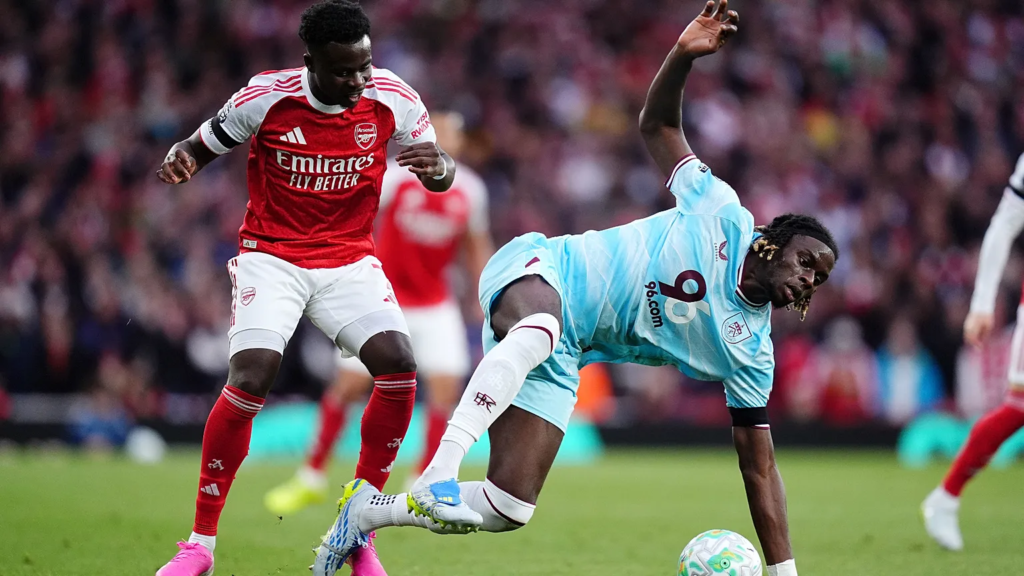
One of the most persistent cognitive biases in sports wagering is the instinctual conflation of a team’s real-world sporting prestige with its actual financial profitability against the point spread. In the realm of football analytics, bookmakers do not price matches based solely on pure statistical capability; instead, they adjust their lines to balance the immense volume of casual public money that naturally floods toward high-profile, celebrated clubs. The legendary 2011/2012 English Premier League season provides a definitive historical blueprint for studying this phenomenon. While the public focused entirely on the star-studded rosters of the top title contenders, savvy value-based bettors extracted substantial profit by consistently backing overlooked, unglamorous squads whose underlying tactical efficiency routinely outpaced the market’s artificially deflated expectations.
Why Public Perception Artificially Inflates the Handicap on Celebrated Teams
The commercial popularity of powerhouse football organizations creates a structural market vulnerability that systematic value bettors can exploit on a weekly basis. Casual sports fans tend to base their wagering decisions on historical name recognition, recent lopsided scorelines against weak opponents, and the individual star power of headline forwards. Because bookmakers are highly risk-averse, they anticipate this public herd behavior by artificially adding a fractional premium to the favorite’s handicap line, effectively forcing public bettors to pay an unviable tax on popular choices.
This mechanism implies that an elite team can win a match comfortably in the real-world standings while simultaneously registering an absolute loss for your bankroll against an inflated two-goal spread. During the high-scoring 2011/12 campaign, this disparity became an absolute chasm as public sentiment regarding the league’s top-tier teams reached an all-time high. Bettors who evaluated fixtures using objective tactical value recognized that the public’s emotional infatuation with the elite tier opened up massive, repeatable counter-betting opportunities on mid-table overachievers.
Quantifying the Against-the-Spread Disparity of the 2011/12 Campaign
To fully grasp how athletic dominance can decouple from wagering profitability, one must examine the actual Against-the-Spread (ATS) performance metrics of that season rather than looking strictly at the traditional league table. By auditing how frequently clubs covered their designated Asian Handicaps, we can clearly isolate the true market darlings from the overhyped public traps. The data tracking below contrasts the public giants against the true financial engines of that specific year.
| Football Club | Real-World League Position | Asian Handicap Cover Rate | Net Financial Yield (Unit Return) | Primary Strategic Market Role |
| Manchester City | 1st | 47.4% | -2.1 Units | Overvalued Public Giant |
| Manchester United | 2nd | 50.0% | +0.2 Units | Neutrally Priced Elite Unit |
| Newcastle United | 5th | 63.2% | +11.4 Units | Undervalued Profitable Engine |
| Norwich City | 12th | 57.9% | +6.8 Units | High-Yield Underdog Target |
| Liverpool | 8th | 34.2% | -13.5 Units | Toxic Public Weight |
Reviewing this comprehensive distribution reveals that Manchester City actually cost handicap bettors capital over the 38-game season despite winning the historic league title, purely because the market continuously demanded that they win matches by multi-goal margins to cover. Conversely, Newcastle United operated as an absolute goldmine for value analysts, outperforming their pre-match handicap lines in over sixty-three percent of their fixtures due to the market’s slow adjustment to their potent transitional attack. The most devastating example of public inflation was Liverpool, whose elite historical profile caused bookmakers to price them as heavy favorites week after week, culminating in a disastrous negative return for anyone who blindly backed their brand name.
The Mechanical Trap of the Narrative-Driven Favorite
The structural failure of public models often stems from an inability to decouple a team’s tactical motivation from its media-driven narrative. When a high-profile club enters a match following a highly publicized victory, the media hype cycle creates a psychological feedback loop that heavily distorts the public betting line.
1.The High-Profile Media Outbreak:Phase 1.
An elite club secures a flashy, lopsided victory in a televised fixture, causing sports media networks to over-index on their attacking metrics and declare them untouchable.
2.Public Sentiment Concentration:Phase 2.
Casual market participants react to the media narrative by aggressively placing early capital on the elite favorite, heavily unbalancing the bookmaker’s liabilities.
3.Artificial Handicap Line Escalation:Phase 3.
To protect their margins against one-sided liability, bookmakers push the Asian Handicap line significantly higher than the true mathematical probability dictates.
4.The Value Underdog Strike Window:Phase 4.
The systematic analyst takes advantage of this peak inflation by backing the disciplined, overlooked opponent on a heavily cushioned spread, maximizing long-term edge.
A handicap line that moves more than 0.25 goals away from its statistical opening baseline due purely to public volume represents a prime fade opportunity, as the underlying tactical capability of the squads has not shifted.
Decoding the Underdog Efficiency Models of Newcastle and Norwich
The extraordinary profitability of Newcastle United and Norwich City during the 2011/12 campaign provides a critical lesson in identifying under-the-radar structural strengths before the broader market catches on. Both clubs operated under highly aggressive offensive philosophies that defied the traditional template of passive, low-block mid-table sides.
Conditional Scenarios Involving High-Velocity Transition Tactics
When a mid-table side possesses an elite attacking duo capable of converting low-probability chances into goals, they become incredibly dangerous handicap targets. Because public models naturally assume these lesser-known squads will capitulate when facing elite possession sides, the spreads are set generously wide, giving these transition-heavy underdogs multiple pathways to cover—either by securing an outright upset or by losing by a single, narrow goal margin.
Executing Against-the-Spread Strategies in Elite Digital Arenas
Exploiting these recurring public overreactions requires a trading environment that doesn’t restrict your access to uninflated opening lines or limit your stakes on high-value underdogs. When public money causes a line to over-correct on a matchday morning, an analytical bettor must be positioned to capture that premium value instantly. Contrast with standard, low-liquidity books shows that utilizing a highly responsive sports betting service via the advanced trading interface of เว็บพนันออนไลน์ ufabet168 ensures that market participants can lock in maximum handicap cushions on undervalued sides before the smart money triggers a late-market correction.
Why Brand Power Fails: The Systemic Deconstruction of Liverpool’s Trap
An expert analyst must carefully study the specific internal and tactical constraints that transform a traditional powerhouse into an absolute financial trap for sports bettors. The 2011/12 Liverpool squad remains the definitive historical warning sign of how an elite brand name can hide massive systemic deficiencies.
- A highly inefficient attacking structure reliant on low-probability long-range shooting.
- Immense historical prestige that forces bookmakers to open lines with an artificial favorite premium.
- Severe psychological anxiety when performing in front of a demanding home crowd against low-block opponents.
Because the general public could not separate the legendary aura of Anfield from the reality of their poor finishing metrics, Liverpool’s handicap line remained heavily inflated all season. They consistently dominated possession statistics but lacked the spatial creativity to break down disciplined defensive units, resulting in a series of frustrating home draws that systematically drained the capital of public backer portfolios.
Balancing Behavioral Psychology Against Algorithmic Pricing Realities
To survive over a long-term football campaign, a sports value analyst must maintain absolute emotional detachment, treating football clubs as abstract financial instruments rather than cultural institutions. The moment a bettor allows personal admiration for an elite manager or a star player to infect their data model, their risk management framework is completely compromised.
Situational conditions dictate that capitalizing on these cold, mathematical line efficiencies requires access to a robust, multi-faceted betting architecture. Observation of these moving market variables implies that routing your capital through a comprehensive, globally integrated online betting site operated under the secure framework of a premier casino online hub guarantees seamless access to alternative handicap cushions, live match tracking data, and deep sub-market liquidity tailored for serious risk-management operations.
Summary
The 2011/2012 Premier League season stands as an enduring lesson that real-world football greatness rarely correlates with against-the-spread profitability. The heavy concentration of casual public capital on high-profile brands like Manchester City and Liverpool consistently forces bookmakers to inflate favorite lines, opening up highly lucrative counter-betting opportunities on structurally sound, undervalued sides like Newcastle and Norwich. By systematically tracking handicap cover rates instead of basic league tables, isolating media-driven narrative distortions, and avoiding traditional powerhouses plagued by structural attacking inefficiencies, value-oriented sports bettors can successfully bypass public traps and build a mathematically sustainable, long-term betting edge.