
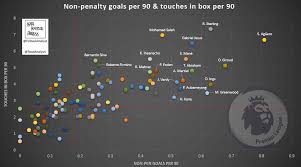
Expected goals (xG) and expected goals against (xGA) let you move beyond raw scorelines and ask a sharper question about 2016/2017 Serie A: who actually created good chances and who genuinely defended well, regardless of short‑term finishing luck. By translating that season’s shot quality into simple, understandable patterns, you can see why some teams were stronger than their goal totals and others looked better in the table than their underlying numbers really justified.
What xG and xGA Measure in Plain Language
xG estimates how likely each shot is to become a goal, based on location, angle, body part, defensive pressure, and other situational factors, and then adds those probabilities up to show how many goals a team “should” score over a match or season. xGA does the same thing in reverse by summing the quality of chances a team allows opponents to take, so it reflects how likely they are to concede given the shots they face. In a 2016/2017 context, xG and xGA turned Serie A from a league of final scores into a league of chance quality, helping analysts distinguish between teams relying on hot finishing and those consistently generating better opportunities.
How xG and xGA Looked for Top Serie A Sides
Modern xG archives for Serie A show that, in seasons close to 2016/2017, teams like Juventus, Atalanta, Roma, and Napoli typically sat near the top in xG per match, signalling sustained attacking pressure and high-quality chance creation. At the same time, Juventus and other title contenders usually featured among the best in xGA, meaning they limited opponents to relatively poor chances and low expected concession totals over the year. When you extend these patterns back to 2016/2017 using historical tools, the broad picture is similar: the league’s elite were not only scoring more but also generating and allowing the kinds of shots that made that dominance statistically reasonable.
This alignment between xG, xGA, and final standings helps explain why Juventus and other top clubs could sustain long runs at the top—chance quality was consistently in their favour, not just the scoreline. For bettors and analysts revisiting that season, it means strong xG/xGA profiles were a more trustworthy indicator of repeatable performance than short bursts of goals from teams whose underlying chance numbers never matched their output.
Reading a Simple xG/xGA Table Without Getting Lost
Most current Serie A xG dashboards use a similar structure, listing xG for, xGA, and often xG difference (xG – xGA) for each team. Even though many of those tools now focus on recent seasons, they illustrate the same layout you would have seen if 2016/2017 xG tables had been available in real time: a ranking by total expected goals and expected goals conceded, sometimes accompanied by xG-based “justice tables” that show where teams should sit if finishing and goalkeeping were perfectly average. Reading those columns is less about memorizing numbers and more about spotting which clubs lived in the top, middle, or bottom tiers for xG and xGA simultaneously.
You can simplify the interpretation by focusing on four basic combinations that were relevant for 2016/2017 and remain useful now.
| xG vs xGA Profile | What It Means in Football Terms | Typical 2016/17 Interpretation |
| High xG, low xGA | Create many good chances, concede few good ones | True top-tier side, title or Champions League calibre |
| High xG, high xGA | Open, high-risk football on both ends | Fun to watch, volatile results, goals in both directions |
| Low xG, low xGA | Conservative, control space but limited attack | Tight games, small margins, draw‑prone |
| Low xG, high xGA | Rarely create good chances, concede a lot | Relegation‑threatened or heavily outgunned over the season |
In the 2016/2017 Serie A lens, the first group roughly maps to the clubs that dominated both ball and box, the second to sides whose matches often turned into shootouts, and the latter two to teams trying to avoid damage rather than consistently imposing themselves. That framing helps you look at underlying numbers and immediately think in terms of on‑pitch behaviour instead of abstract statistics.
How xG and xGA Change the Way You Read “Form”
When you look back at any run of results in 2016/2017, xG and xGA help you judge whether a streak reflected sustainable performance or just short‑term randomness in finishing or goalkeeping. A team that went unbeaten for five matches but repeatedly lost the xG battle might have been riding a wave of clinical finishing and opponent wastefulness, hinting that results would cool once those rates regressed. Conversely, a side stuck in a sequence of narrow defeats but consistently winning the xG and xGA battle was likely closer to a rebound than their league position suggested.
Viewed this way, xG and xGA become form “quality checks” rather than standalone predictions. Instead of seeing a series of scores and assuming improvement or collapse, you can ask whether the underlying chance balance moved in the same direction, or whether results were drifting away from what the shot quality really implied. For anyone reviewing 2016/2017 with a betting mindset, that difference is crucial—because odds typically follow results faster than they follow deeper process indicators.
Using xG/xGA in a Data‑Driven Betting Perspective
For a data-driven bettor, using 2016/2017 Serie A xG and xGA would have meant building a simple routine: compare each team’s season-long xG and xGA to league averages, track recent moving averages over the last 5–10 matches, and then compare those patterns to the odds being offered. Teams showing consistently high xG and low xGA relative to their price looked underappreciated; those with flattering goal or points totals but mediocre xG/xGA looked overvalued. Over a season, that gap between process and price is where value typically lives.
In practical workflows, bettors who relied on advanced metrics often anchored their research on xG/xGA dashboards or exported data before checking markets; when they then moved to place wagers through their preferred web-based service, สมัคร ufabet ufa168 ทางเข้า simply became the execution layer where they chose whether to back underlying strength, fade statistical weakness, or stay out entirely in matches where xG and xGA told an ambiguous story. The key is that decisions started with process metrics and only then reacted to the odds, rather than being driven by prices alone or by recent scorelines detached from chance quality.
Where xG and xGA Strengthen Classic 2016/2017 Analysis
xG and xGA did not replace traditional metrics like goals, shots, or possession; they refined them. In 2016/2017, combining expected numbers with standard stats allowed analysts to see whether a high-scoring team depended on low-probability shots flying in, or whether their output came from repeatable patterns of high-quality chance creation in dangerous areas. On the defensive side, xGA helped separate clubs that conceded few goals because they genuinely restricted opponents’ chances from those that leaned heavily on outstanding goalkeeping or opponent wastefulness.
For example, a defence that allowed low xGA but conceded more than expected might have been unlucky or suffered from below-average shot-stopping, which could improve with time or personnel changes. By contrast, a team that allowed high xGA but conceded little looked more fragile than its goal tally suggested, relying on keeper heroics that might not be repeatable season to season. In both cases, the expected numbers gave a clearer sense of future risk than goals against alone, especially when thinking about how 2016/2017 patterns might carry into subsequent campaigns.
Where xG and xGA Mislead or Fail
Despite their value, xG and xGA are not magic truths about 2016/2017 or any other season; their accuracy depends on model design, data quality, and how they are interpreted. Different providers can assign slightly different xG values to the same shot based on which variables they include and how they weigh them, so small differences between teams or matches should not be overinterpreted as definitive. In addition, xG models generally focus on shot quality rather than pre‑shot events, meaning they may underrate teams whose key strength lies in preventing shots altogether or in forcing low-danger attempts from poor angles.
xGA shares similar limitations: a side that defends with extreme compactness might allow a few high‑value chances rather than many low‑value ones, skewing their xGA higher despite overall solidity. Moreover, models struggle to capture contextual factors such as individual finishing skill, specific goalkeeping styles, or psychological pressure that might systematically tilt conversion rates in or against a team’s favour. When applied to 2016/2017, this means xG/xGA should be read as strong indicators of process, not as an infallible map of what “should have happened.”
In addition, some fans and bettors divided their attention between analytical reading of xG/xGA and more recreational gambling options within a casino environment; when focus shifted away from careful, data-backed decisions toward higher‑variance entertainment, the advantages offered by understanding 2016/2017’s expected numbers often disappeared in practice, because staking discipline and match selection no longer followed the logic that xG and xGA had helped build.
Summary
Looking back at the 2016/2017 Serie A season through xG and xGA transforms it from a set of scorelines into a season‑long record of chance quality and defensive resistance. Teams with strong xG and low xGA profiles were not just lucky winners but structurally sound sides, while clubs whose goals and points outran their expected numbers carried more risk of regression than their tables suggested. Used as part of an educational, data‑aware approach, these metrics make it far easier to read past and future Serie A campaigns with a clearer sense of what performances are likely to last and which ones are built on temporary swings in finishing and saves.